

April 10
100/265


On This Day…
1606 — The Virginia Company of London Is Chartered
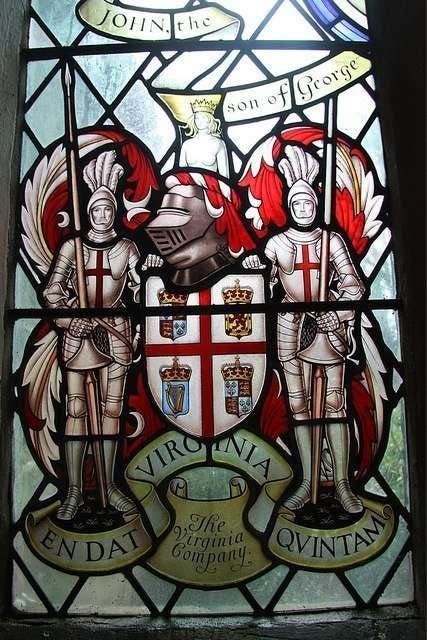
On April 10, 1606, King James I of England signed the First Charter of Virginia, officially establishing the Virginia Company of London as a joint-stock enterprise with a mandate to colonize the eastern coast of North America. The charter stretched claimed territory from present-day Maine down to the Carolinas, designated the London Company as responsible for financing recruitment and transport of settlers, and guaranteed those born in the colonies all the rights of English citizens. Less than a year later, those settlers would land at Jamestown — the first permanent English settlement in the Americas.
That royal signature in 1606 set in motion the entire political and cultural inheritance of the United States. The Virginia Company’s corporate model of colonization — profit-driven, chartered by the Crown, structured around land rights and labor extraction — planted the seeds of American capitalism, property law, and the plantation economy that would haunt the continent for centuries. Today’s debates over corporate power, land rights, Indigenous sovereignty, and the legacies of slavery all trace a direct line back to that April morning when a king signed a piece of paper and decided the fate of a continent he’d never seen. Power structures built for commerce tend to outlast their original charters.
1815 — Mount Tambora Erupts in the Deadliest Volcanic Event in Recorded History
On April 10, 1815, the eruption of Mount Tambora on the island of Sumbawa in what is now Indonesia reached its violent climax — the largest confirmed volcanic eruption in at least 1,300 years, registering a Volcanic Explosivity Index of 7. The eruption directly killed an estimated 11,000 people in the immediate vicinity, with ash blanketing settlements and incinerating everything for miles. The blast ejected at least 37 cubic kilometers of dense-rock equivalent material into the atmosphere, creating a stratospheric aerosol cloud the size of Australia that would block sunlight across the entire Northern Hemisphere.
The consequences of that single eruption reshaped the modern world in ways that are still unfolding. The aerosol cloud triggered the “Year Without a Summer” in 1816, causing global temperatures to drop 2–7 degrees Fahrenheit, destroying harvests across North America and Europe, killing an estimated 100,000 additional people through starvation and disease, and triggering waves of migration and political unrest. The climate disruption accelerated the development of the bicycle (invented as a horse replacement when horses starved), inspired Mary Shelley to write Frankenstein, and may have contributed to the cholera pandemic of the 1820s. Today, as climate scientists model the catastrophic potential of volcanic winters and debate the risks of solar geoengineering, Tambora remains the gold-standard case study: when the atmosphere tips, civilization doesn’t just wobble — it fractures.
1865 — General Robert E. Lee Issues His Farewell Order to the Army of Northern Virginia
On April 10, 1865 — one day after his surrender to Ulysses S. Grant at Appomattox Court House — Confederate General Robert E. Lee addressed his troops for the last time in General Order No. 9, praising them for their “unsurpassed courage and fortitude” and formally disbanding the Army of Northern Virginia. The order was a masterwork of dignified defeat: it did not concede the justice of the Union cause, it did not recant secession’s ideology, and it transformed the rank and file from rebels into victims of circumstance, laying the emotional groundwork for the Lost Cause mythology that would dominate Southern memory for generations.
Lee’s farewell order was less an ending than a rebranding — and its political effects proved more durable than the war itself. The mythology it seeded allowed the Confederacy to lose the battlefield while winning the cultural narrative, enabling the rise of Jim Crow, the proliferation of Confederate monuments erected between 1895 and the 1960s as political statements, and the slow sabotage of Reconstruction.
Today, as communities across the country continue fighting over the public commemoration of Confederate figures, Lee’s final order is a reminder that how a nation chooses to remember its wars shapes its politics just as profoundly as how it fought them. A military surrender is not the same thing as an ideological one.
1912 — The RMS Titanic Departs Southampton on Her Maiden Voyage
On April 10, 1912, the RMS Titanic — the largest ocean liner ever built, nicknamed the “Millionaire’s Special” and commanded by the highest-paid ship’s captain in the world — set sail from Southampton, England, bound for New York City. On board were approximately 2,224 passengers and crew, including some of the wealthiest names in American and British society, as well as hundreds of third-class immigrants seeking a new life. The ship carried only 20 lifeboats, designed to accommodate roughly 1,178 people — barely half the souls on board — because maritime regulations, confidence in the ship’s design, and the arrogance of the age had never seriously contemplated the need for more.
The Titanic didn’t just sink — it exposed the fatal gap between elite confidence and real-world consequences that recurs in every era. The ship’s designers and operators believed that their engineering triumph had conquered risk itself; regulators had never caught up to the technology; and the wealthy passengers in first class had a dramatically better chance of survival than the poor immigrants locked below. The disaster produced the first international maritime safety conventions, fundamentally reformed lifeboat requirements, and created the International Ice Patrol — a direct precursor to the international regulatory bodies we take for granted today. Every time a government, corporation, or technology sector declares that a system is “too big to fail” or too well-designed to need safeguards, the Titanic is the answer that history keeps writing.
1919 — Emiliano Zapata Is Assassinated at Hacienda de Chinameca
On April 10, 1919, Mexican revolutionary leader Emiliano Zapata rode into the Hacienda de San Juan Chinameca in Morelos, Mexico, lured by a subordinate general who had feigned defection from the Carranza government. As a trumpet fanfare played, Guajardo’s men opened fire, killing Zapata and his escort. Carranza’s government had Zapata’s body transported to Cuautla and displayed publicly to prove that the champion of Tierra y Libertad — Land and Liberty — was genuinely dead. He had spent a decade fighting to return communal ejido lands to Mexico’s indigenous and peasant communities, and his movement had forced those rights into the Constitution of 1917.
Zapata died, but Zapatismo didn’t. His assassination transformed a guerrilla leader into a martyr whose ideological framework has proven remarkably resilient across more than a century of Mexican politics. The EZLN — the Zapatista Army of National Liberation — invoked his name when it rose in Chiapas on January 1, 1994, the very day NAFTA took effect, framing the trade agreement as the latest betrayal of the landless poor.
Today, as Mexico grapples with land rights in indigenous communities, narco-state violence, and the legacies of structural inequality baked in by colonial land distribution, Zapata’s ghost still stalks the argument. The powerful have a recurring habit of believing that killing a movement’s leader kills the movement itself.
1925 — F. Scott Fitzgerald Publishes The Great Gatsby*
On April 10, 1925, Charles Scribner’s Sons published F. Scott Fitzgerald’s third novel, The Great Gatsby, to mixed initial reviews from a public and critical establishment that largely failed to recognize what they were holding. T.S. Eliot and Gertrude Stein understood; most others didn’t. The novel sold modestly during Fitzgerald’s lifetime — he died in 1940 believing it a failure — until the Armed Services Editions program sent it to American soldiers during World War II, and it found its permanent audience. Set in 1922, it anatomized the Jazz Age’s intoxicating promise and its rotten core: the illusion that in America, reinvention was always possible, and that wealth erased all sins.
A century later, The Great Gatsby reads less like period fiction and more like a live diagnosis. Its central argument — that the American Dream is structurally rigged, that old money protects itself with impunity while the self-made man is left holding the bill — resonates with a country in which wealth inequality has is reaching Gilded Age levels, digital plutocracy has replaced the old robber barons, and political corruption runs openly across party lines. The novel’s enduring presence on high school syllabi hasn’t always translated into political consciousness, but its core insight keeps proving itself: the green light at the end of the dock keeps moving, and the people who built the dock never intended for everyone to reach it.
1998 — The Good Friday Agreement Is Signed in Belfast
On April 10, 1998 — Good Friday — negotiators in Belfast reached a landmark settlement ending nearly 30 years of violent conflict in Northern Ireland known as the Troubles, which had claimed more than 3,500 lives. Brokered by US Senator George Mitchell alongside the British and Irish governments and eight Northern Irish political parties, the agreement established a power-sharing government in the Northern Ireland Assembly, created cross-border institutions linking Belfast to Dublin, and set out a framework for the decommissioning of paramilitary weapons. The agreement was subsequently ratified by voters on both sides of the border in referendums the following month.
The Good Friday Agreement stands as perhaps the most successful diplomatic achievement of the late 20th century — a proof of concept that even the deepest ethnic and national conflicts, hardened by decades of blood, can be resolved through patient, multiparty negotiation brokered by outside parties with no dog in the fight. Its survival has been tested repeatedly, most acutely by Brexit, which threatened to re-impose a hard border on the island of Ireland and reignite the tensions the agreement had quieted. In an era of rising nationalism, collapsing multilateral institutions, and seemingly intractable conflicts from Ukraine to Gaza, the GFA is a reminder that peace agreements are not events — they are ongoing political projects that require constant maintenance, good faith, and the courage to keep honoring what was signed.